01 · Everyday wear
Durability is more than one hardness number.
Sapphire belongs to the corundum family. GIA describes it as relatively hard at 9 on the Mohs scale, with excellent toughness and no cleavage, making it a strong choice for rings exposed to regular wear.
Diamond ranks 10 for hardness, which means strong resistance to scratching. GIA also cautions that diamonds can still be damaged and that prongs can shift over time. A ring’s long-term security depends on the complete design: stone shape, inclusions, girdle, setting, metal, maintenance and the wearer’s habits.
- Choose a setting that protects vulnerable edges and suits your activity level.
- Remove either ring for gym work, gardening, cleaning and impact-heavy tasks.
- Inspect the claws and setting regularly; hardness does not prevent a loose stone.
02 · Colour and character
Diamond leads with light. Sapphire can lead with colour.
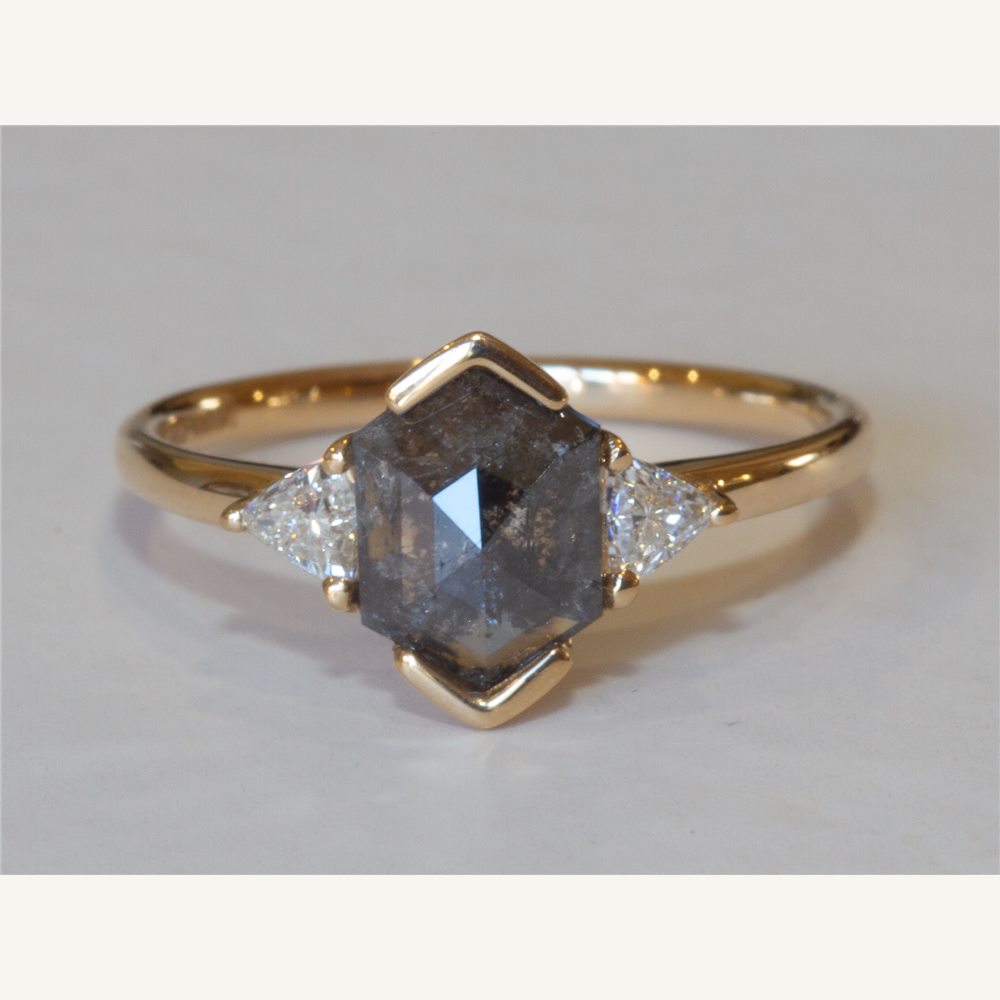
A colourless or near-colourless diamond is often chosen for brilliance and neutrality. Cut, proportions and clarity characteristics shape how it returns light. Alternative rose-cut and salt-and-pepper diamonds create a softer or more textural interpretation.
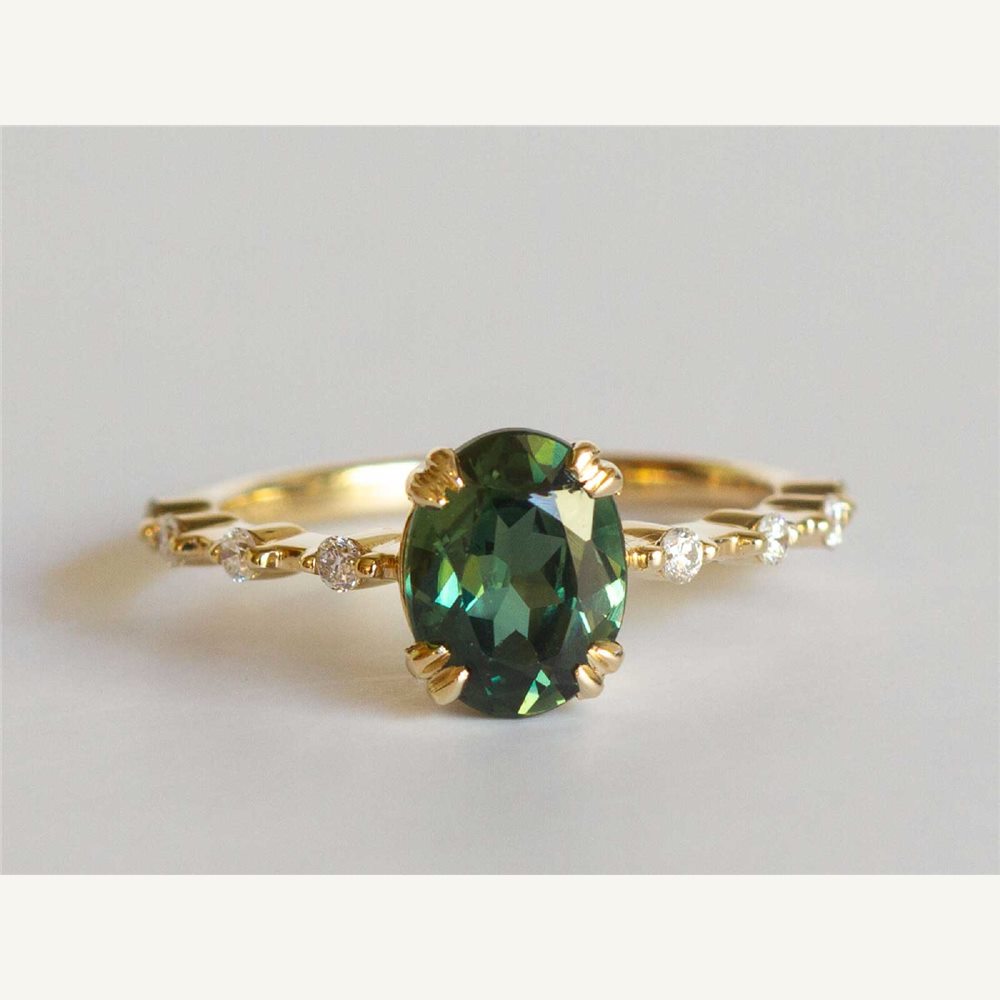
Australian sapphires can show blue, green, teal, yellow and distinct colour bands. Geoscience Australia records important sapphire deposits across eastern Australia, including Queensland and New South Wales. That geological variety can translate into stones whose colour changes across the face or through different light.
- Ask to see natural stones in more than one lighting condition.
- Treat colour zoning as an individual feature to understand, not automatically a flaw.
- Compare the actual stone, not only a category photograph or colour name.
03 · Budget and value
There is no honest category-wide price shortcut.
A larger sapphire is not automatically less expensive than a smaller diamond, and a diamond is not automatically the better store of meaning or value. Stone quality, origin, treatment, rarity, cut, documentation, supporting diamonds, metal and craftsmanship all influence the finished price.
Start with a comfortable total budget and the visual effect you value. The current Divine Elements catalogue offers both stone directions at several price points, making side-by-side comparison more useful than relying on a broad rule.
04 · Origin and documentation
Ask what each claim means for this exact stone.
An ‘Australian sapphire’ claim should refer to the origin of the individual sapphire, not simply the location of the designer. Ask what origin information accompanies the stone and whether treatments, laboratory reports or other records are available.
For diamonds, an independent grading report can document characteristics such as carat weight, colour, clarity and cut where applicable. A report is not the same as an ethical-sourcing guarantee, and not every natural gemstone is sold with the same type of documentation. The studio should separate what is known, documented and still to be confirmed.
05 · The decision
Choose the response you want to feel every day.
Choose Australian sapphire when distinctive colour, geological connection and natural variation are central to the story. Choose diamond when a neutral palette, particular style of light or a diamond-specific tradition matters most.
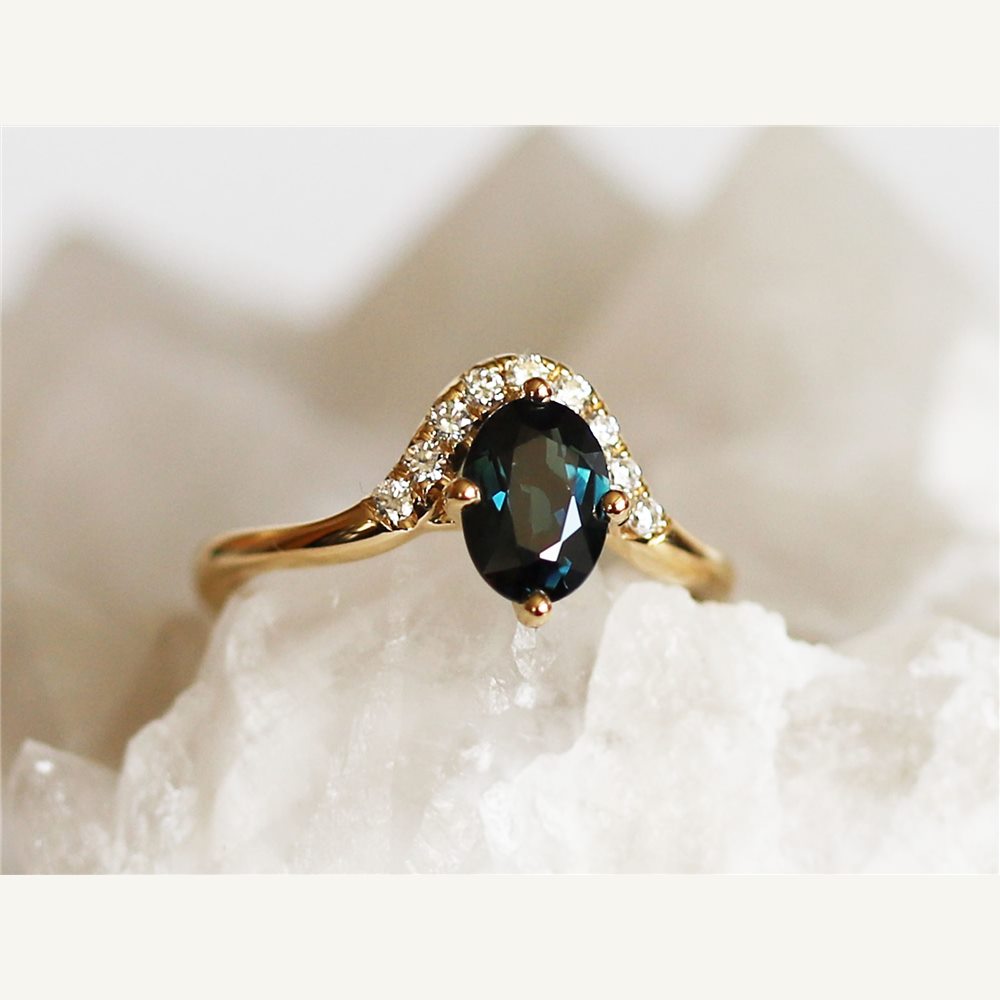
If both appeal, the answer may be a sapphire centre with diamond accents—or a comparison shortlist that lets proportion, colour and feeling decide. Save the pieces that stay with you, then compare them before discussing the final stone with the studio.